Facility Manager — A modern property management platform estate owners, mall owners, and property managers
Role
Product Designer (End-to-End) — Information Architecture, User Research, Interaction Design, Visual Design
Problem
Property management in Nigerian estates is almost entirely manual. Rent and service charge collection happens through bank transfers and WhatsApp confirmations. Visitor access is managed at the gate with no digital record. Tenant lists live in spreadsheets — if they exist at all. Bills are sent individually, tracked inconsistently, and disputed regularly.
For the property manager, this means constant administrative overhead and no real visibility into what's happening across their buildings. For the resident or tenant, it means friction at every touchpoint — paying bills, receiving receipts, getting visitors in, communicating with management.
The gap wasn't just a software gap. It was a process gap. There was no defined system for how any of this should work.
Solution
The management platform covers the full operational lifecycle of running a property — from setting up an estate to managing the people and finances within it.
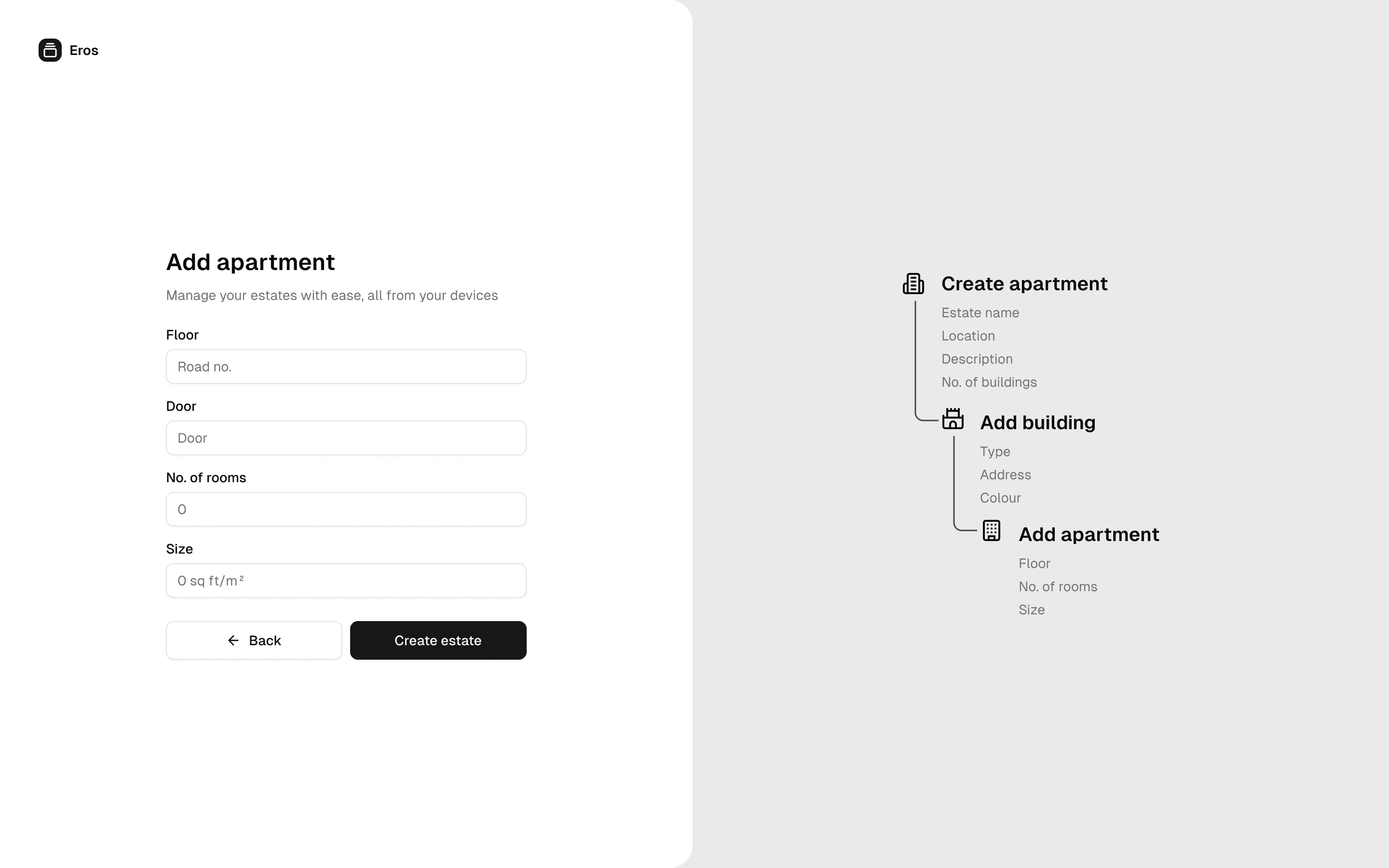
Estate creation and setup: The platform starts with the ability to create and configure an estate — buildings, units, floors, and the relationships between them. This gave managers a structured foundation to attach everything else to, rather than managing a flat list of residents with no spatial context.
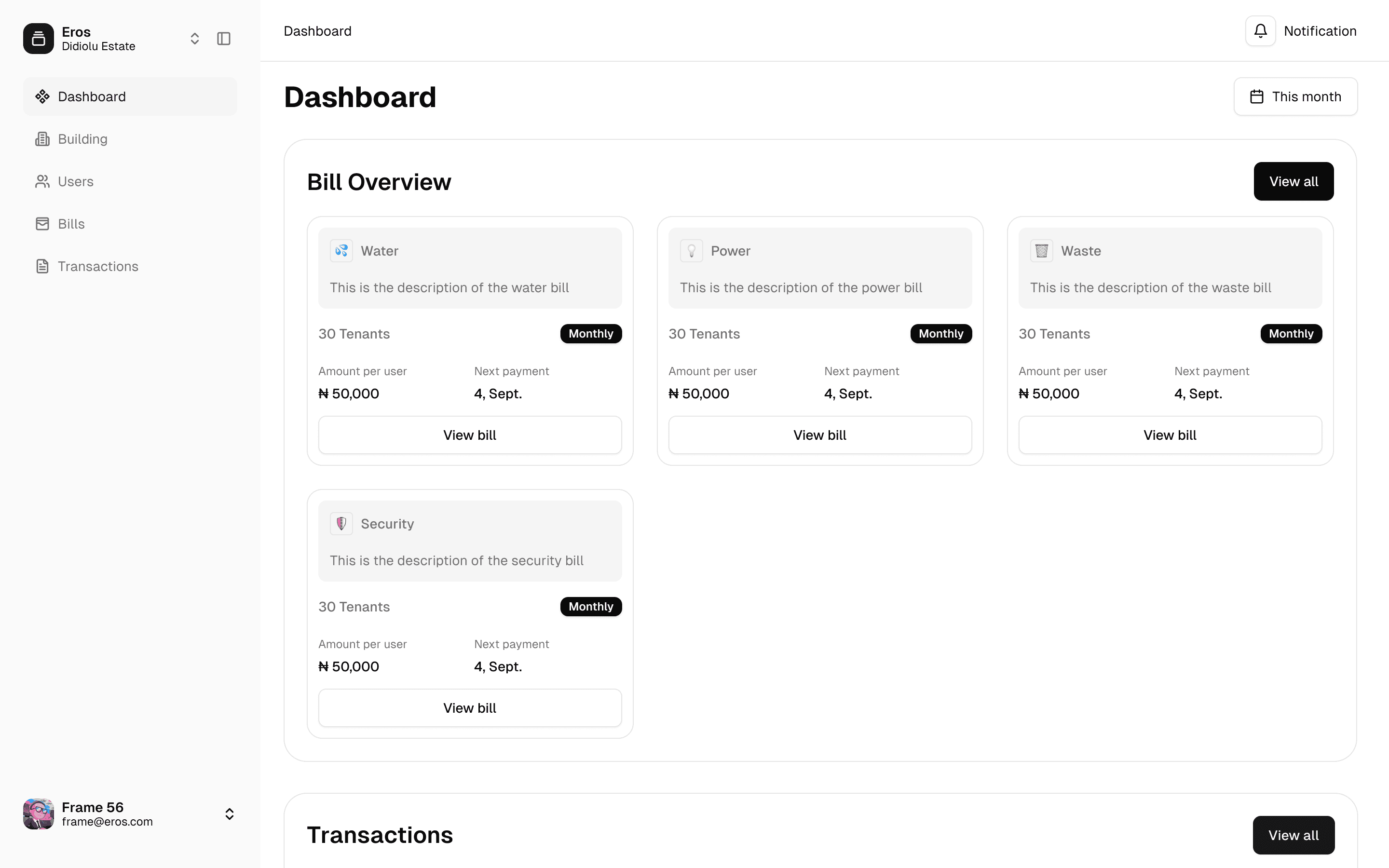
Dashboard: The entry point into the whole system. Designed to answer the most important question a property manager has every morning: what needs my attention today? Outstanding bills, recent transactions, occupancy overview, and any flags
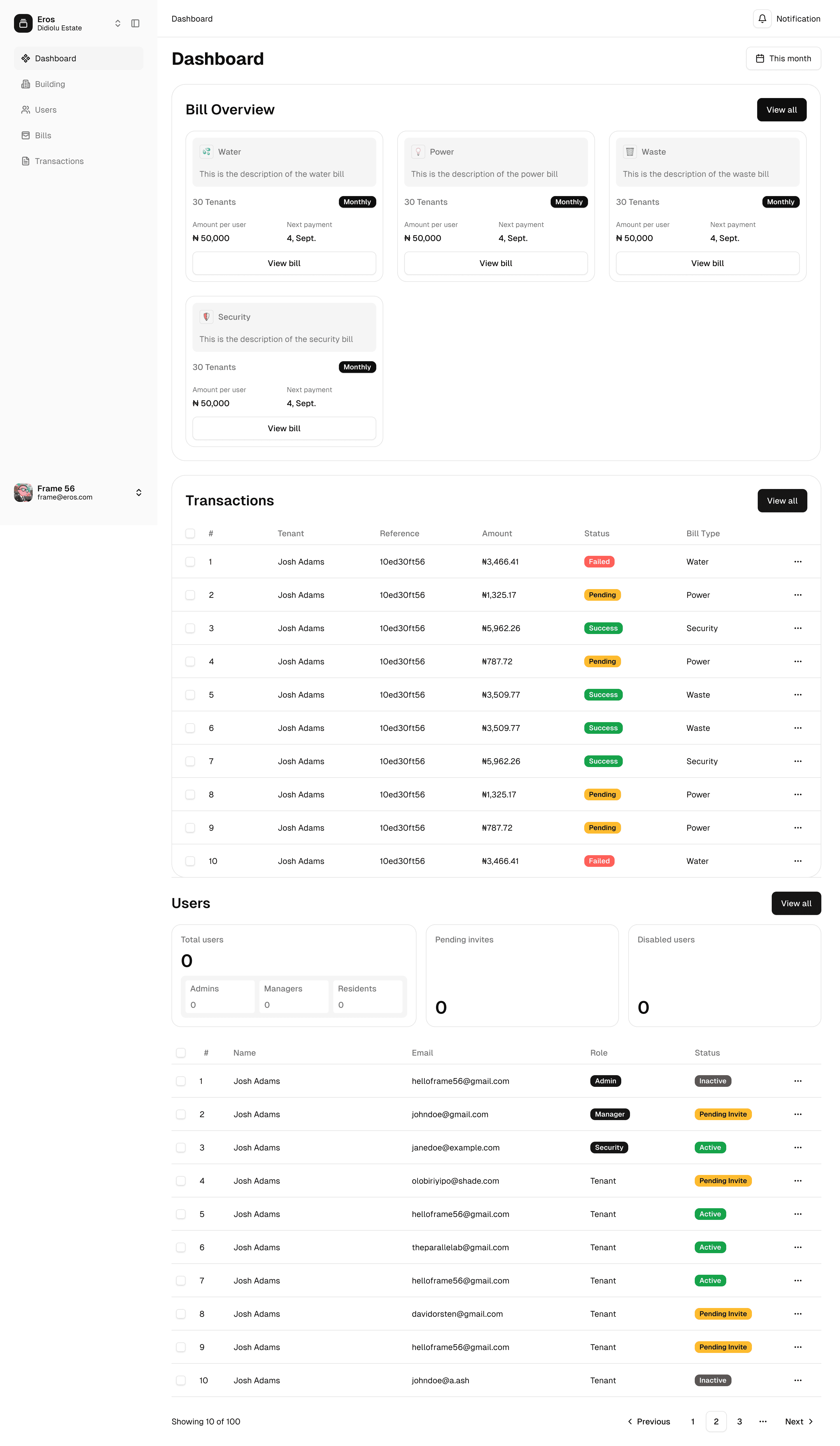
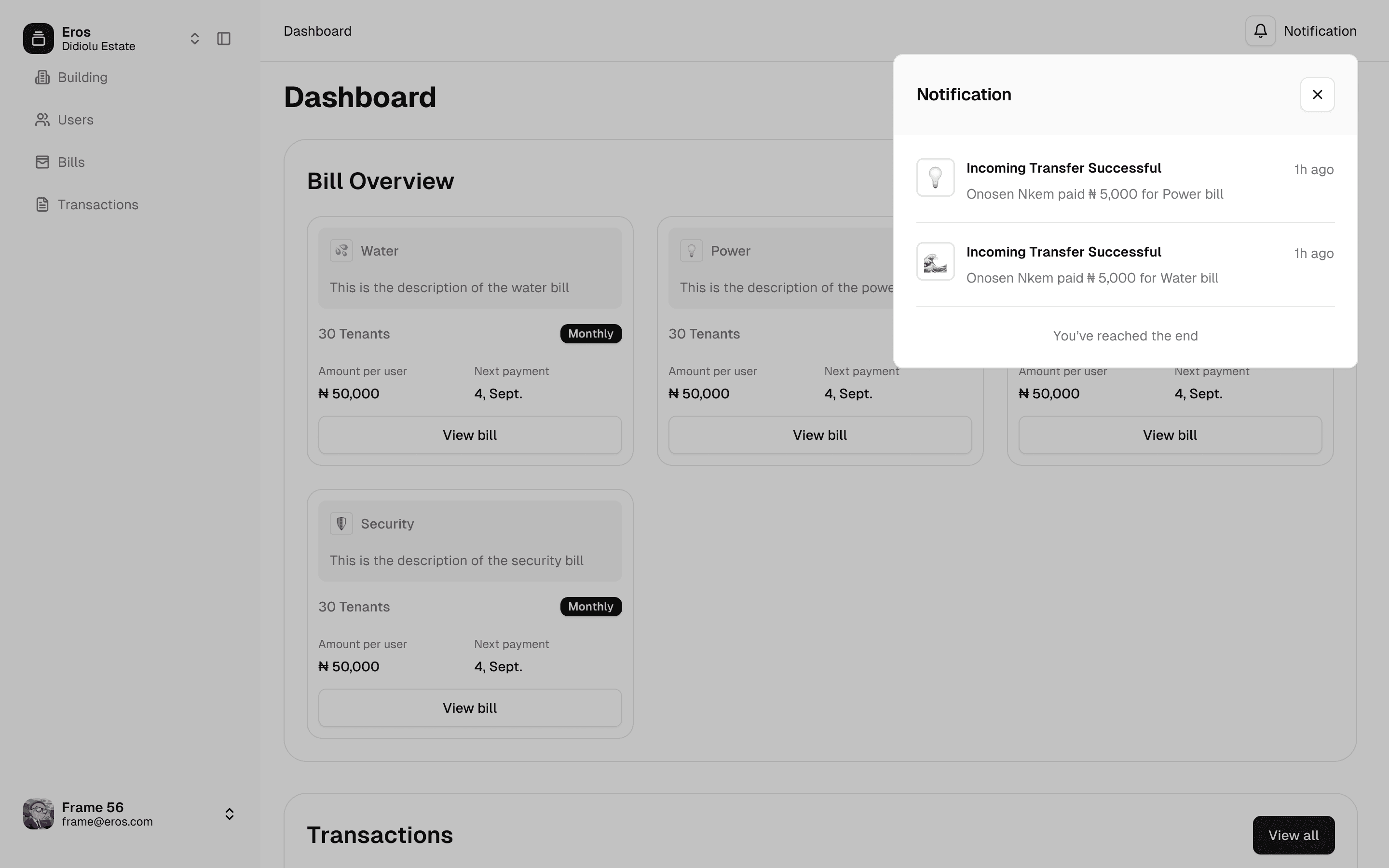
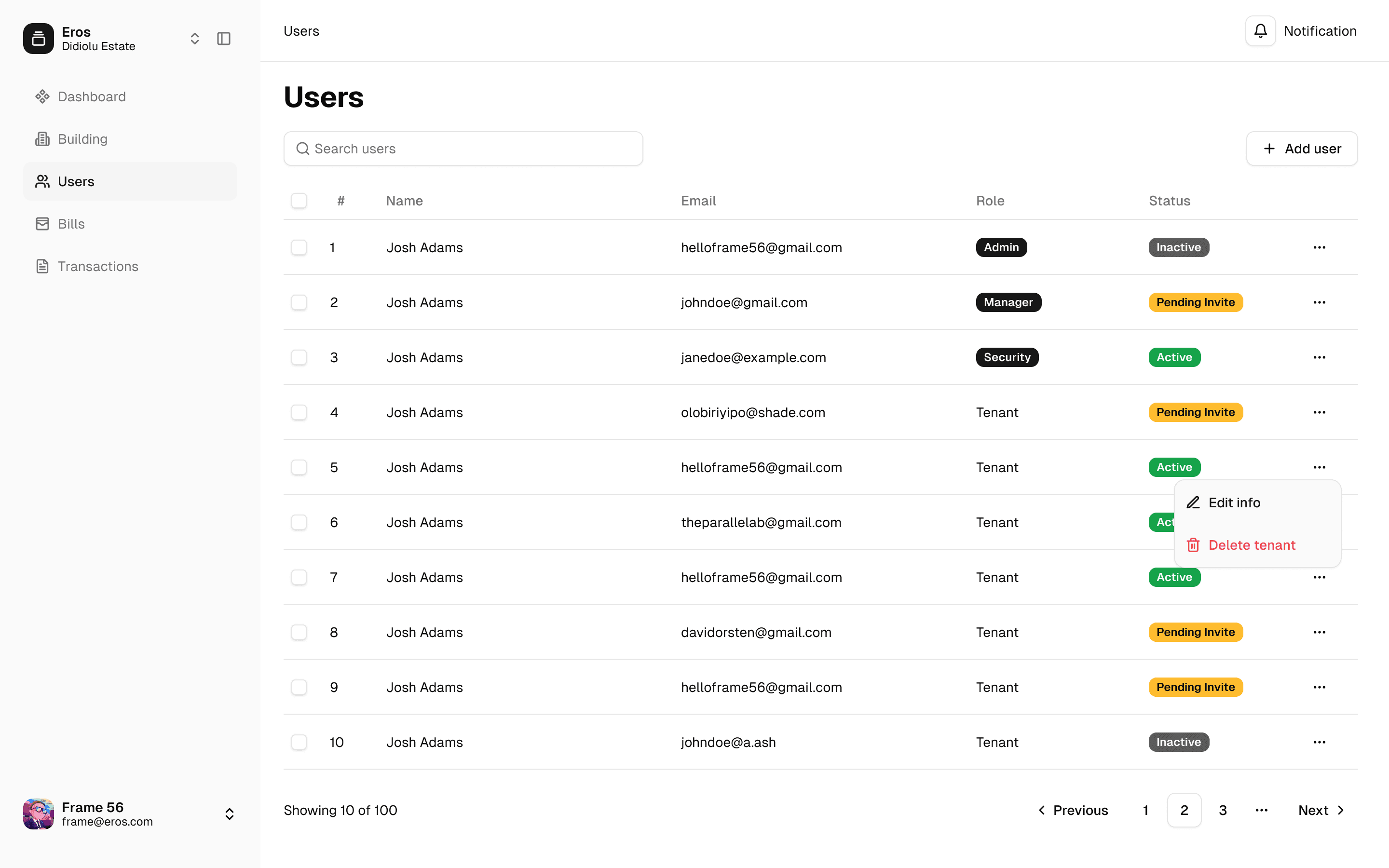
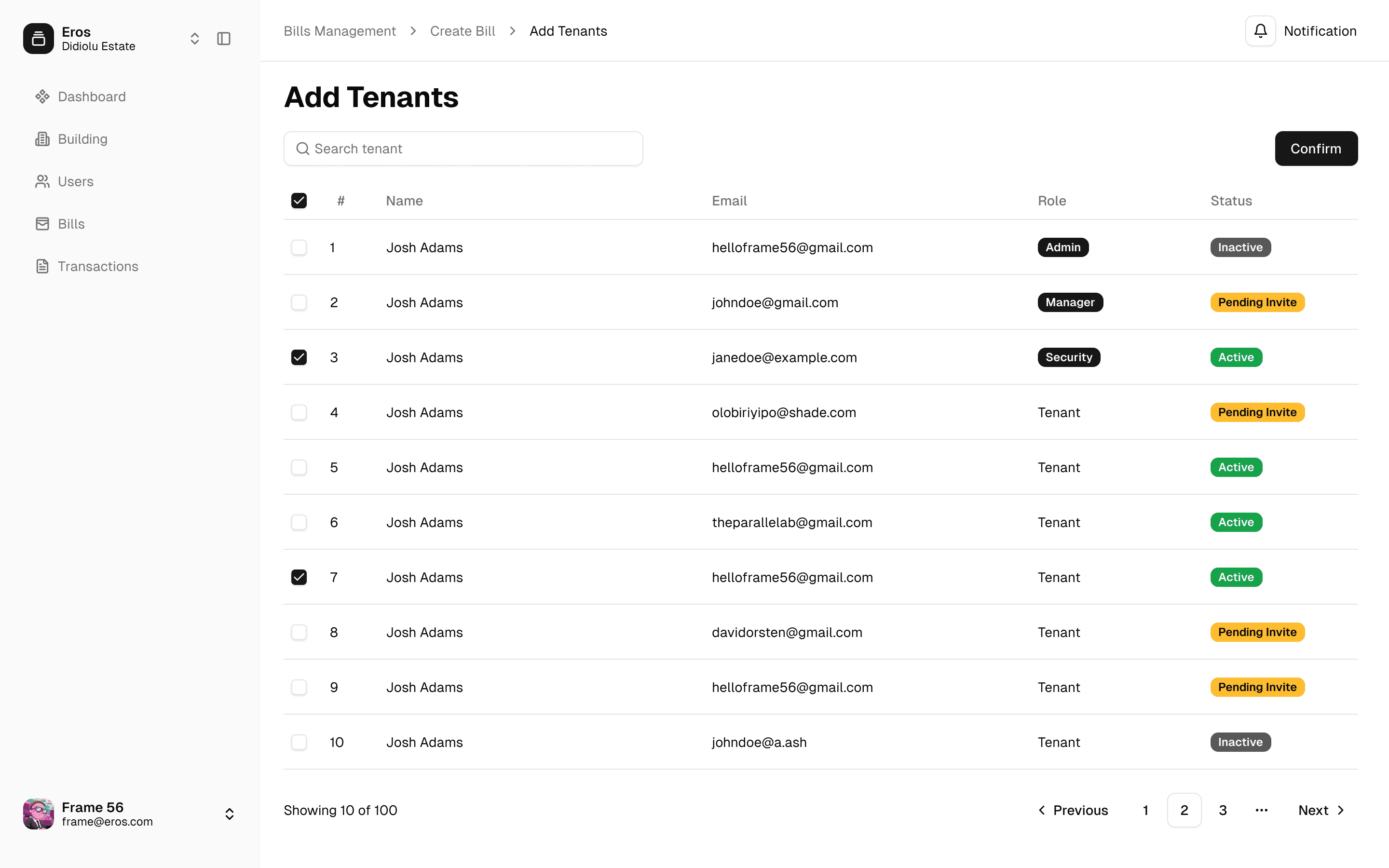
Tenant management: A full view of every tenant across the estate — who they are, which unit they occupy, their lease status, and their payment history. The design made it easy to find a specific tenant quickly and understand their situation at a glance, without digging through records.
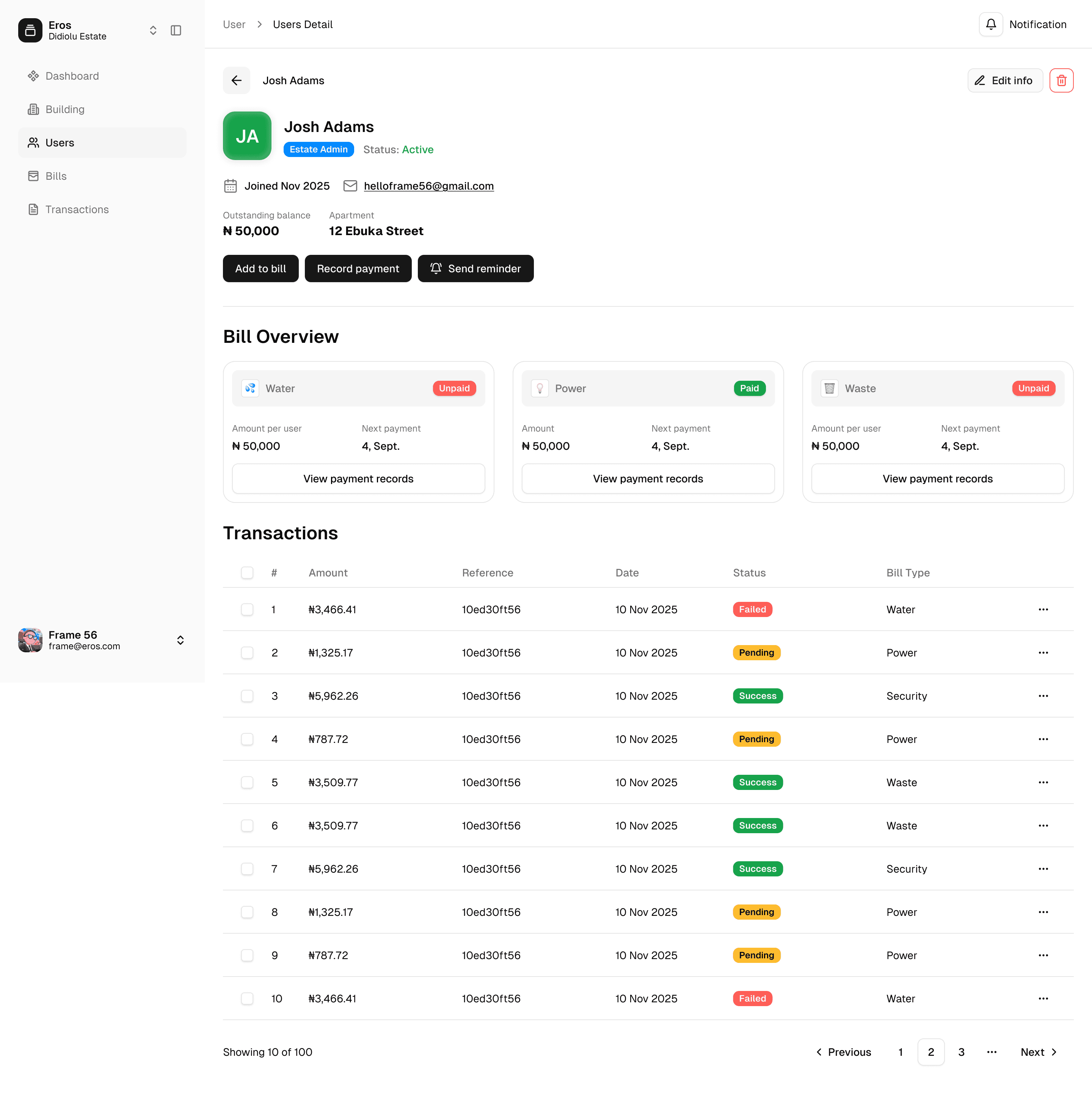
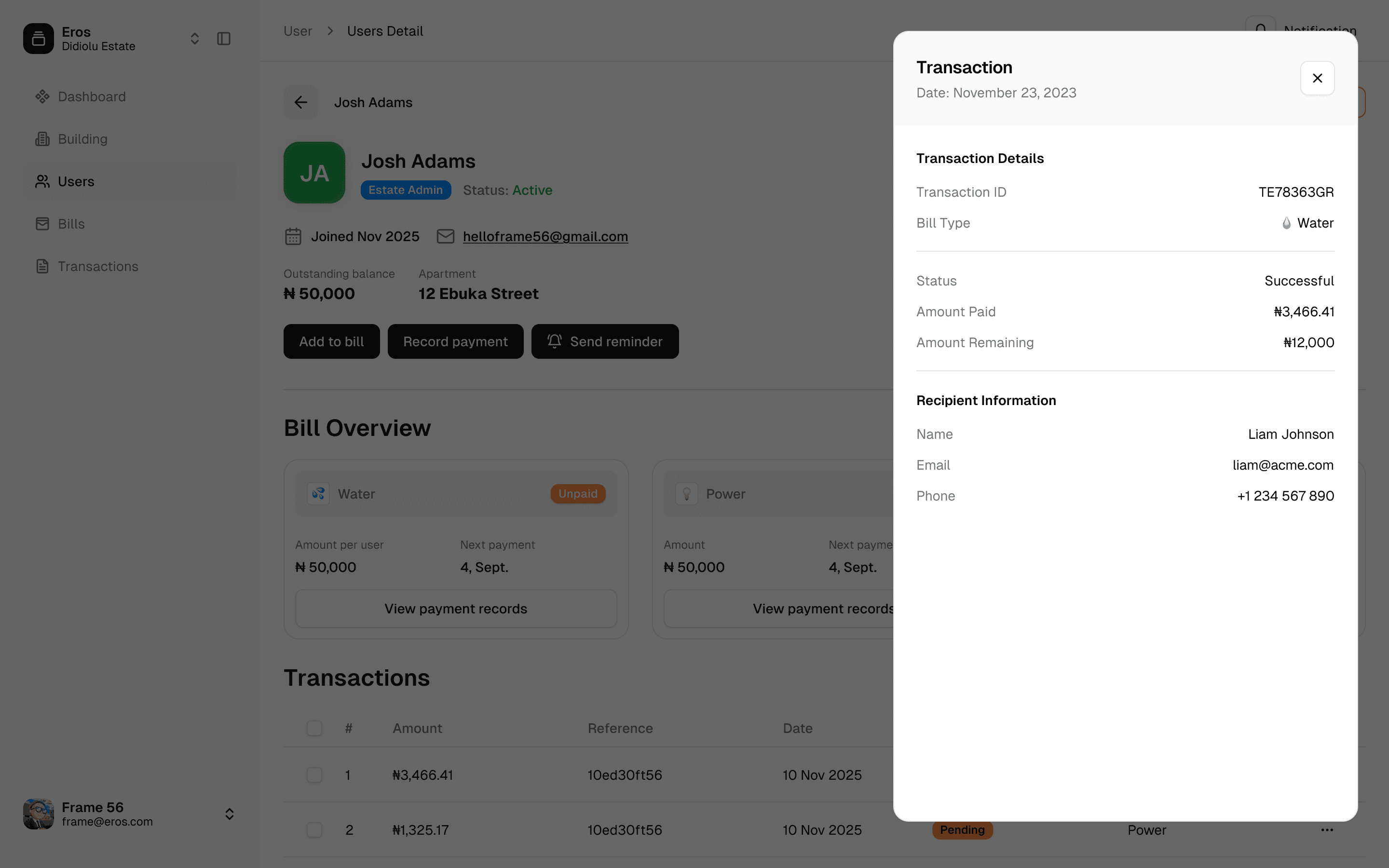
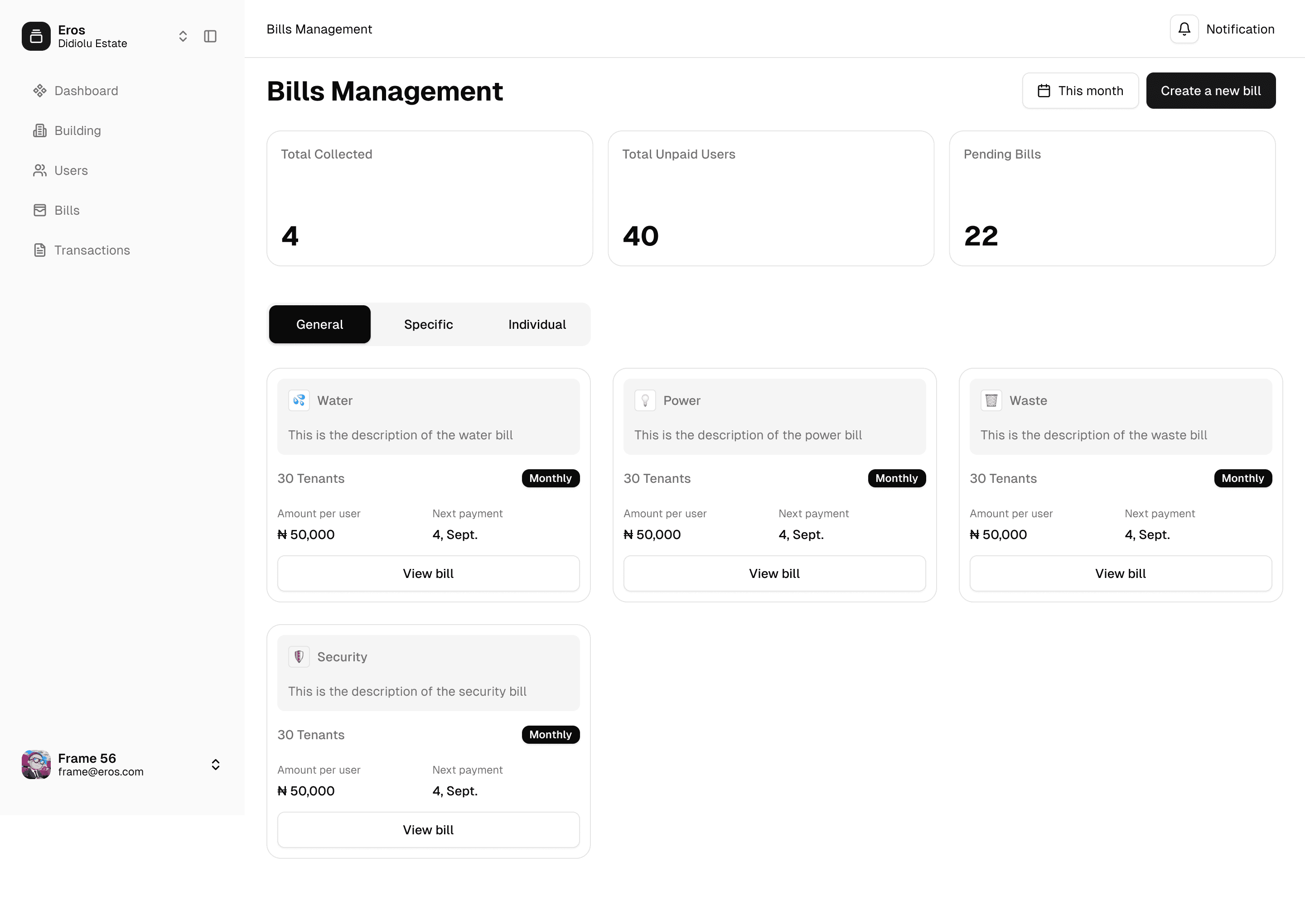
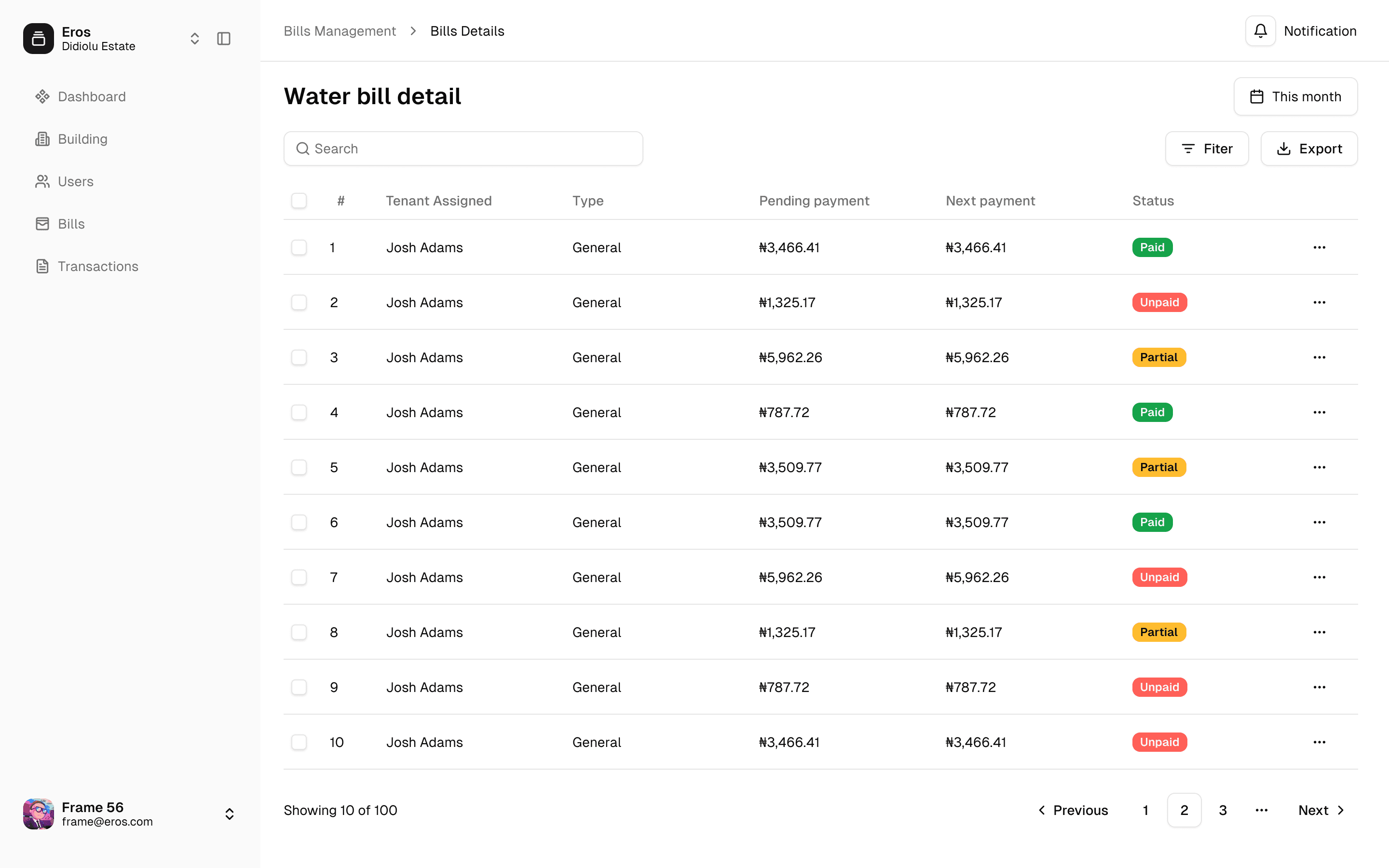
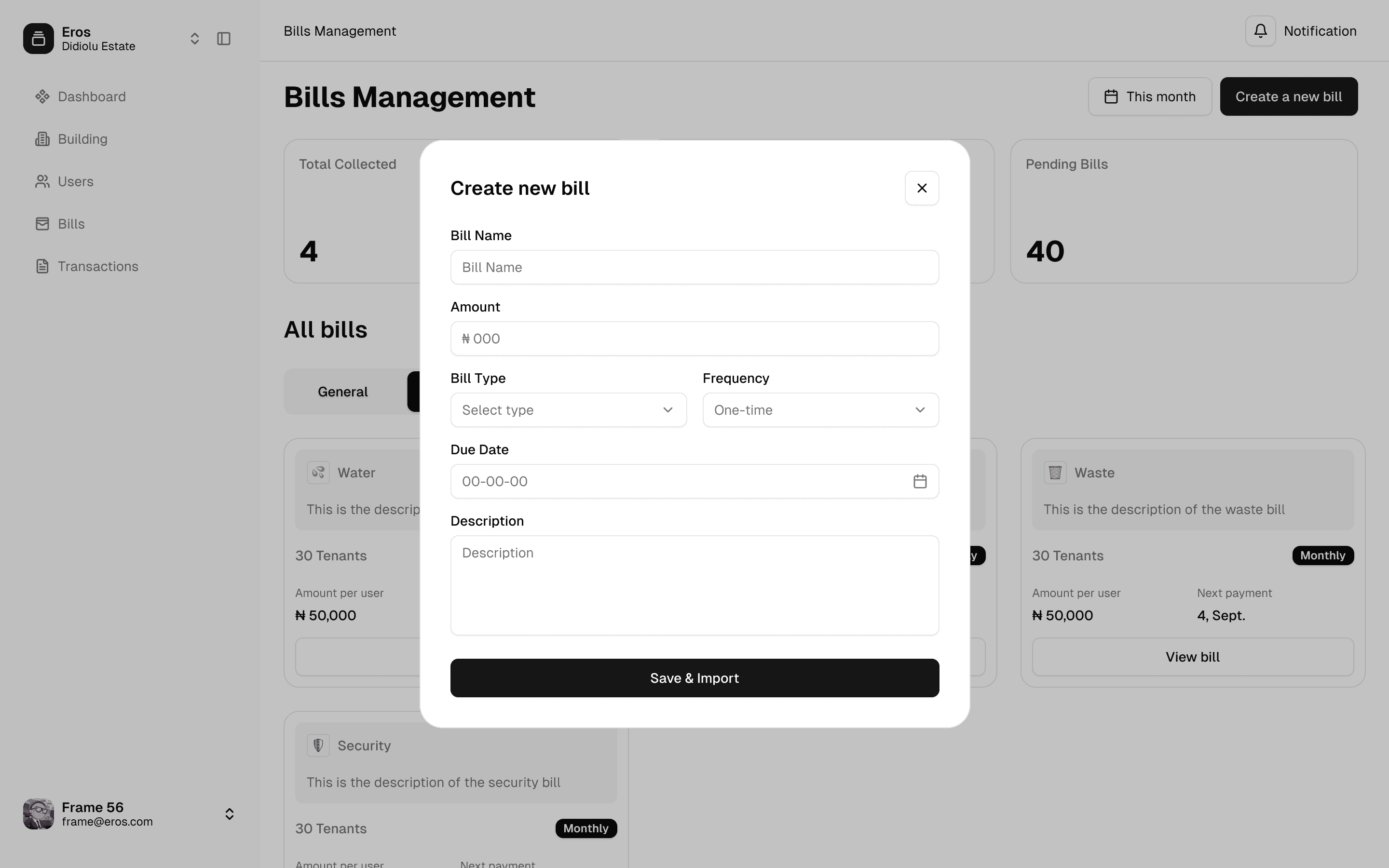
Bill management: This was one of the most operationally important parts of the system. Managers could create bills, assign them to individual tenants or entire buildings, set due dates, and track payment status across all of them. The visual design made it immediately clear which bills were paid, which were outstanding, and which were overdue — without requiring the manager to run reports.
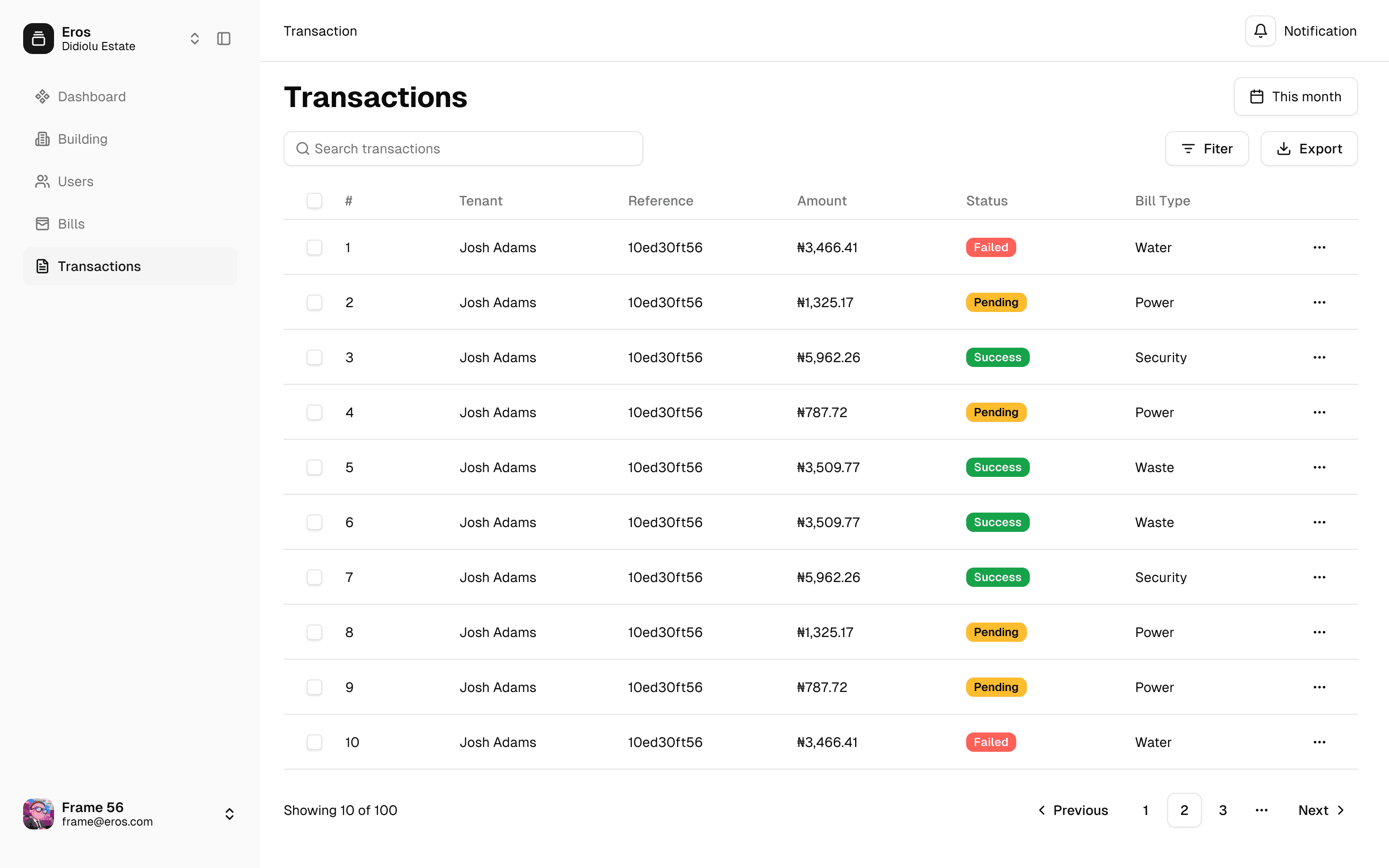
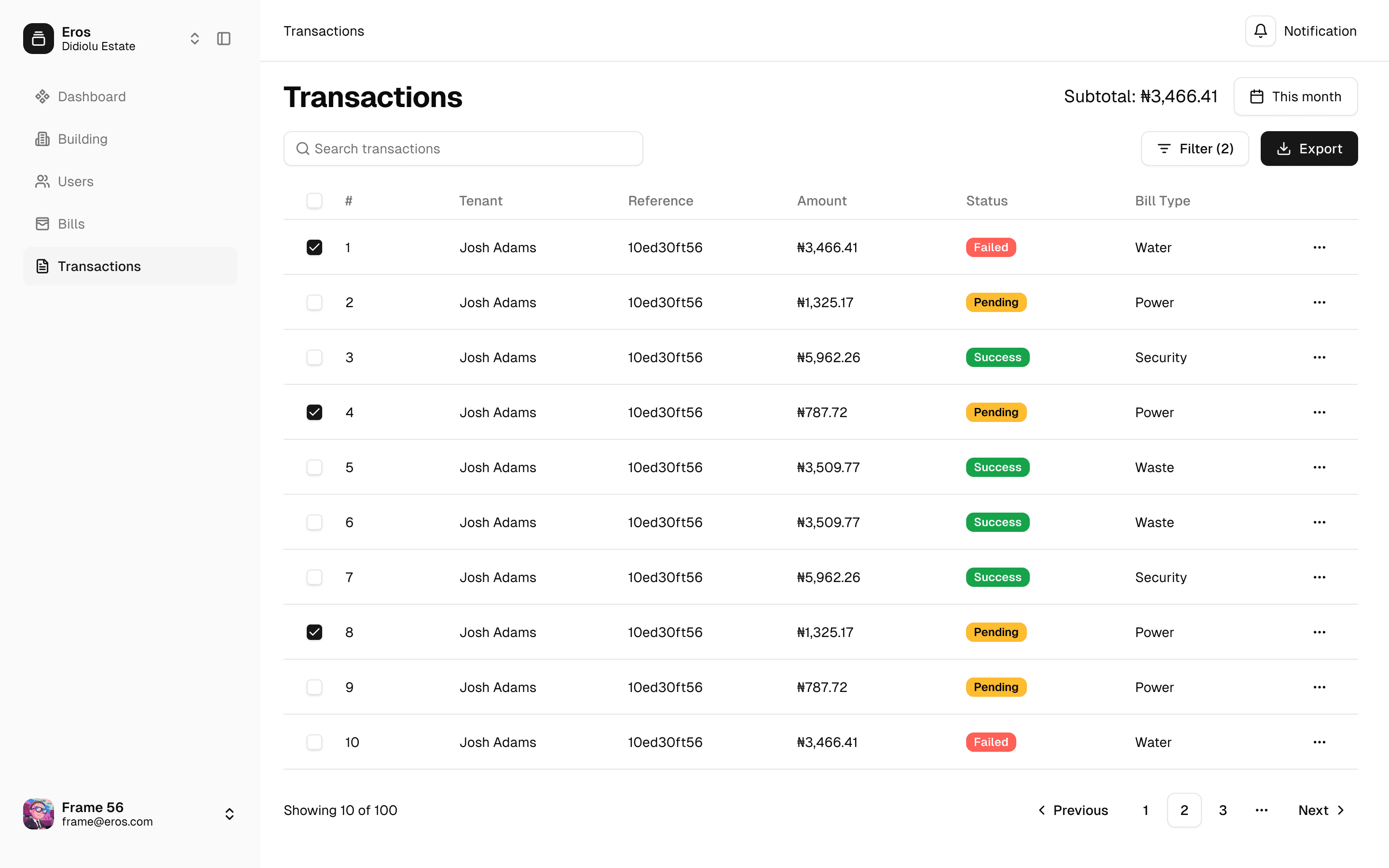
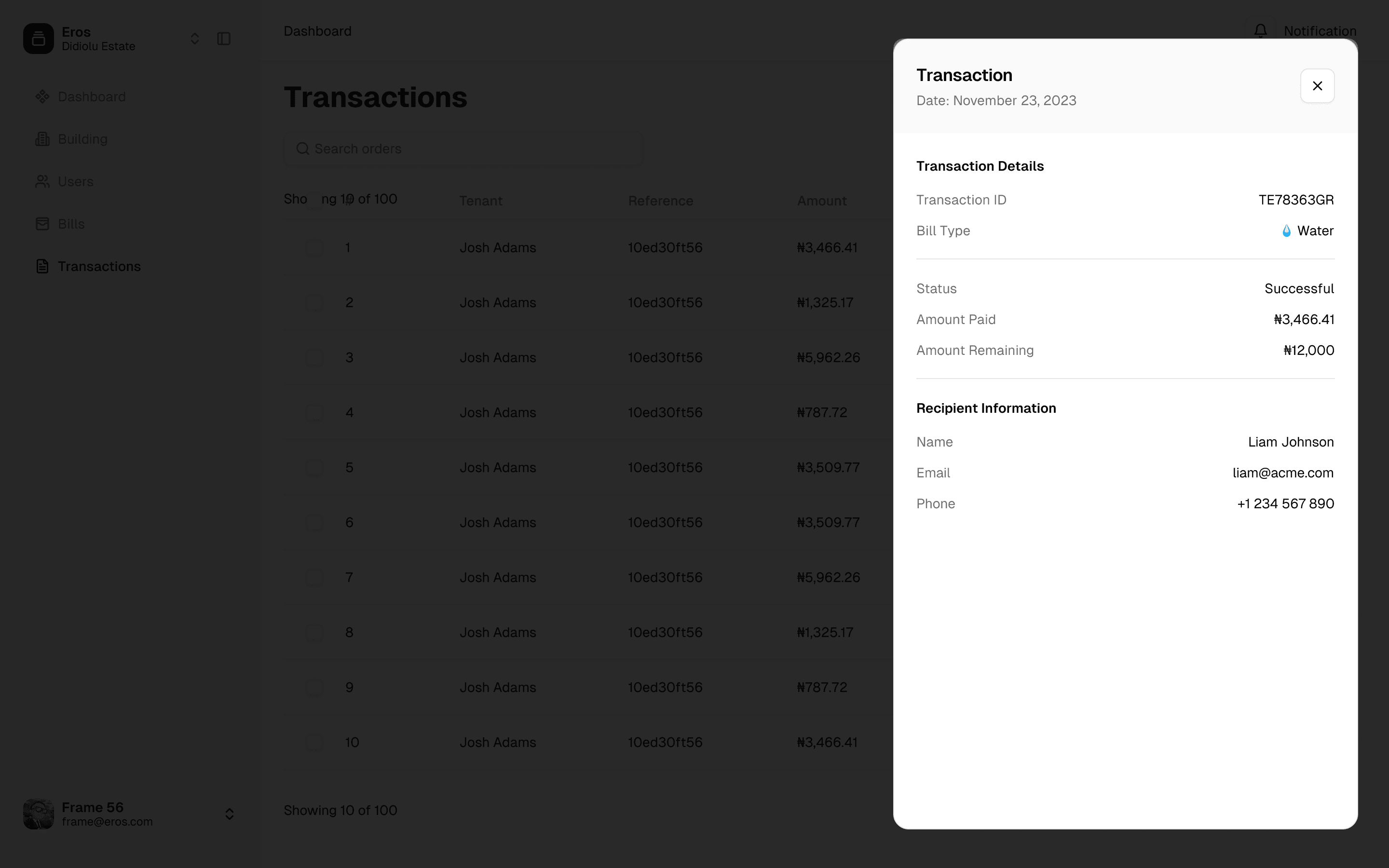
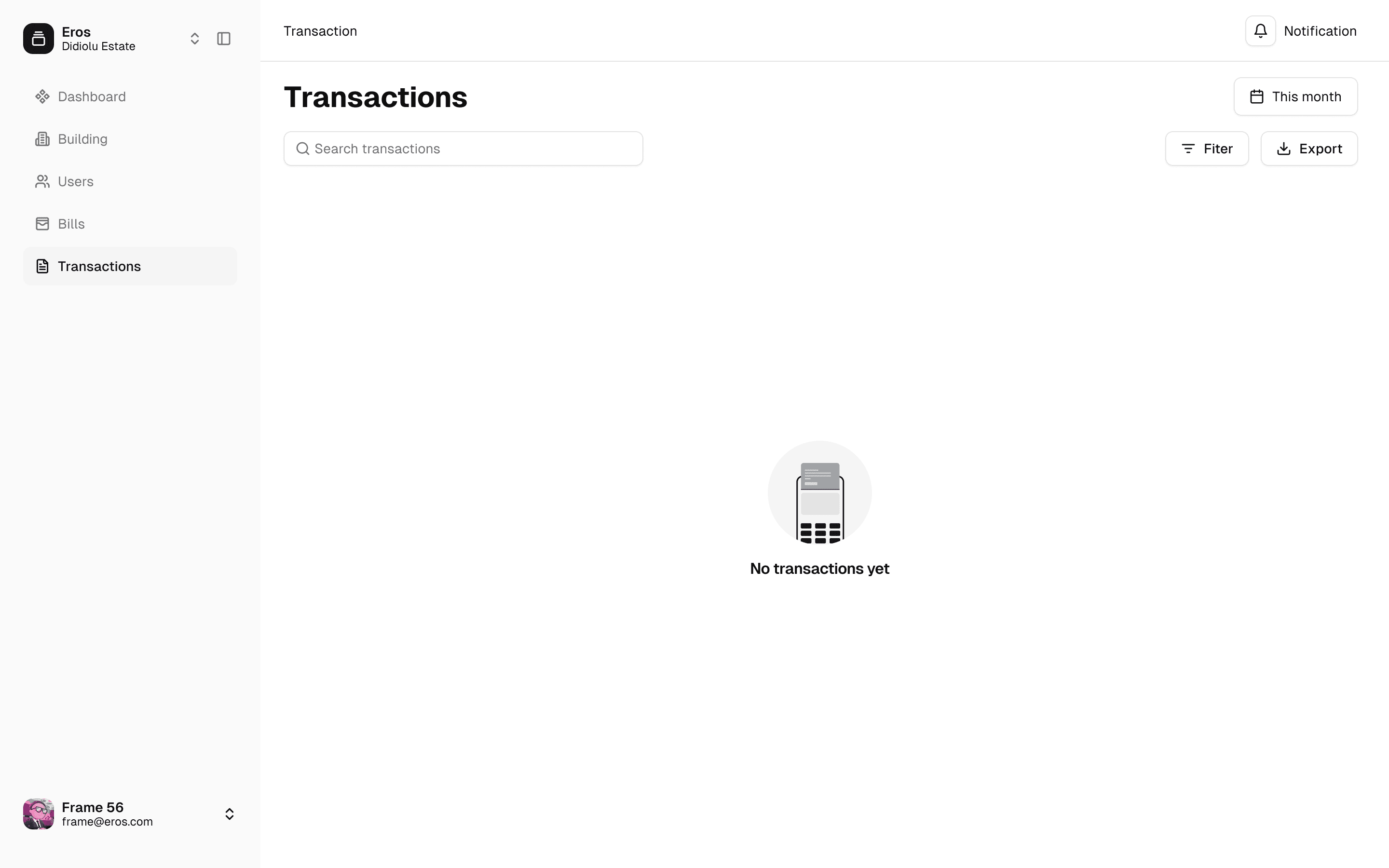
Transactions: A centralized view of all financial activity across the estate. Every payment, every bill, every outstanding balance — in one place, with enough detail to investigate any transaction and enough summary to understand the overall financial health of the property at a glance.
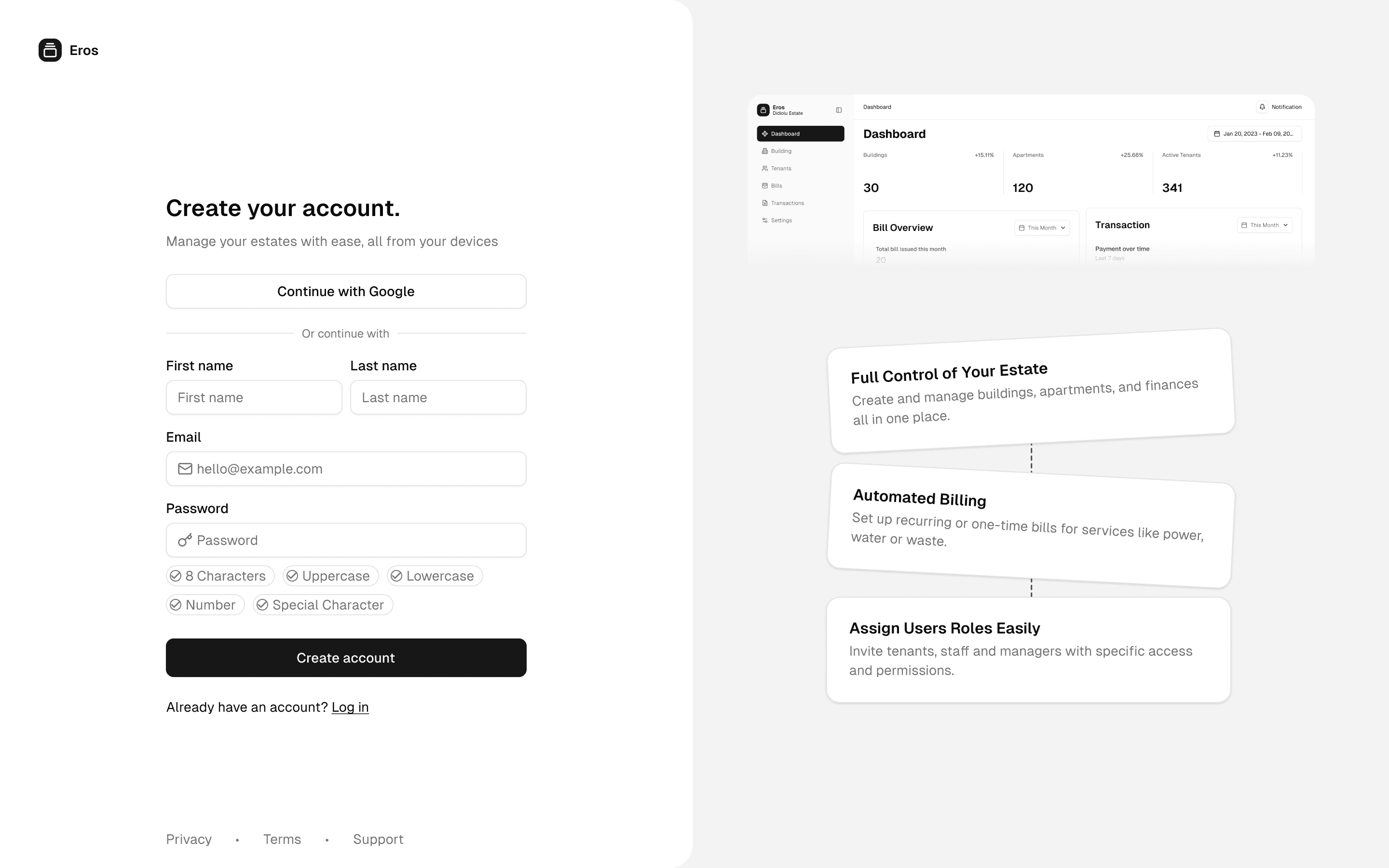
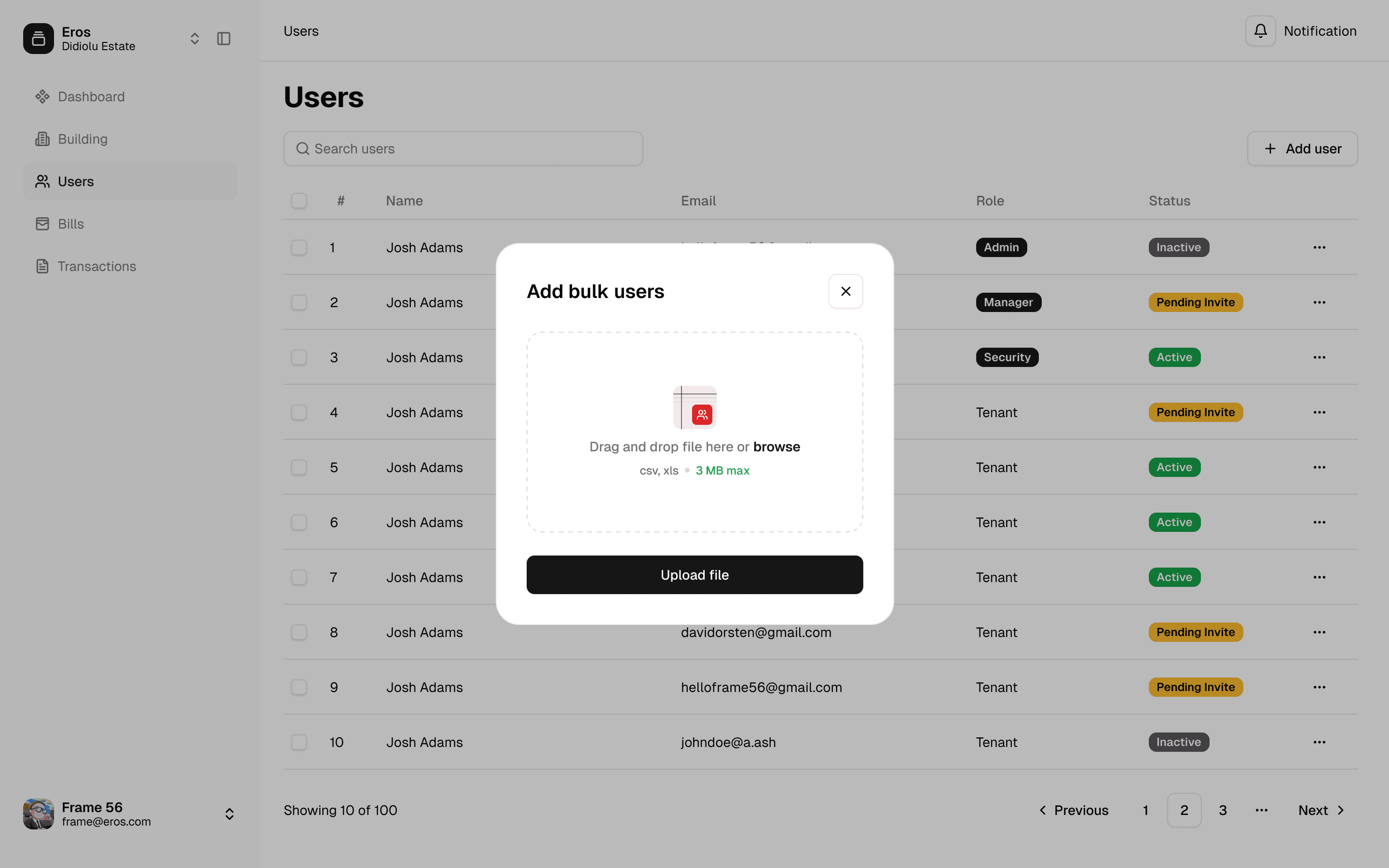
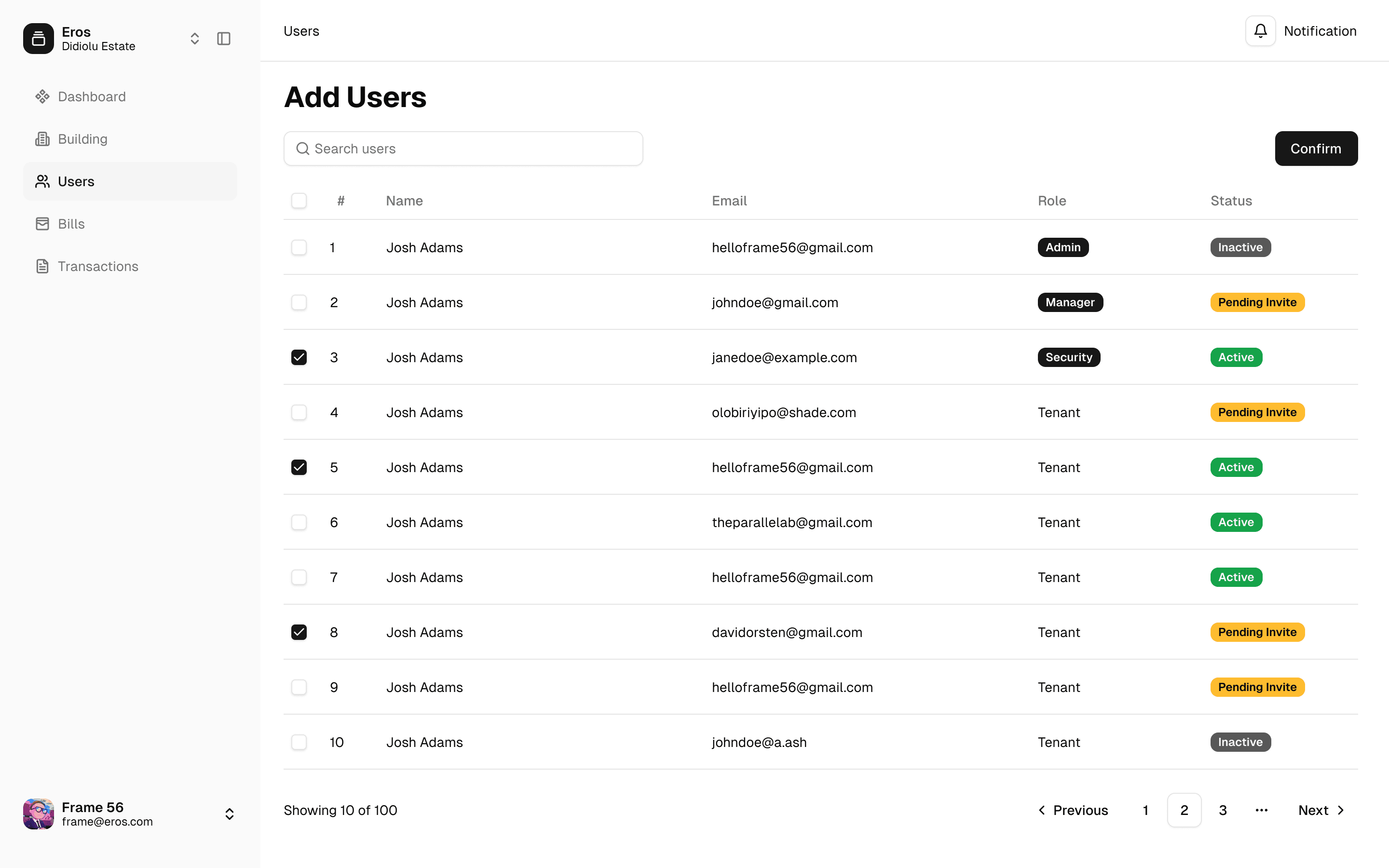
User management: The ability to manage who has access to the management platform and at what level — useful for estates with multiple staff members who need different levels of visibility and control.
Credits
The Facility Manager team.